The Pre-Round Hour: Judging a UK Golf Break by Its Practice Ground
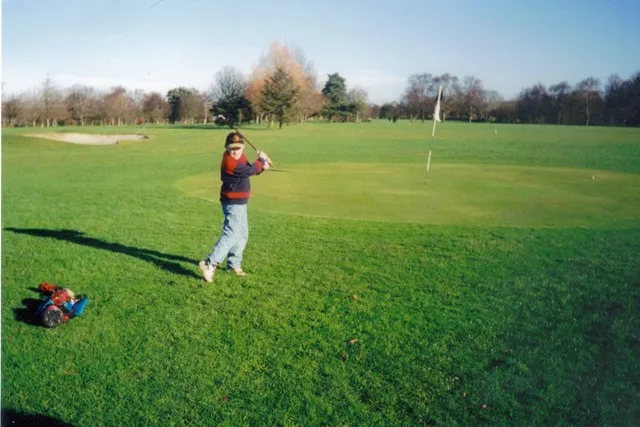
Photo: Lewis Clarke, CC BY-SA 2.0, via Wikimedia Commons
The first tee is rarely the true beginning of a round. Long before the card is exchanged, the practice ground has already told the attentive golfer much about the venue: whether it is cared for, whether it understands the needs of a serious club player, and whether the hour before play is treated as part of the experience or merely as space to be filled. For a UK golf break in 2026, that hour deserves to be part of the booking decision.
A premium break is not made by the range alone. It is made by the relationship between the practice facilities, the course and the clubhouse. When those three elements are in accord, the warm-up becomes a pleasure in its own right. When they are not, the golfer notices — even if only subconsciously — that the day has begun on the back foot.
What a Serious Warm-Up Actually Requires
A proper pre-round routine is not a matter of hitting as many balls as possible. It is a sequence: a few gentle wedges to find the bottom of the swing, a handful of mid-irons to establish rhythm, a couple of drivers to calibrate the tee shot, and then a move to the putting green. The range should support that sequence without friction.
The essentials are straightforward but often overlooked. The turf should be firm enough to take a divot and honest enough to reveal a heavy strike. Targets should be visible at useful distances, not merely at the far end of a field. Balls should be clean and consistent, because a mixed bag of tired practice balls tells the golfer that the facility is being managed to a price rather than a standard. There should be room to hit without feeling crowded, and a short-game area where wedges can be tested from fairway, rough and sand.
The putting green matters just as much. A surface that rolls at a representative speed for the course is worth more than a large, decorative green that behaves nothing like the first green. A club golfer preparing for a medal or a match should be able to gauge pace and borrow in the ten minutes before walking to the tee. If the practice green and the course greens are strangers to one another, the warm-up has been decorative rather than useful.
Reading the Ground: Upkeep and Design
The practice ground is one of the most honest parts of any golf facility. It is difficult to disguise neglect there. Divot patterns that have not been rotated, mats that have been left in place through the summer, bunkers without rakes, and signage that has faded all point to a venue that is not paying attention. None of these details is fatal on its own, but together they form a pattern.
Design matters too. A range that faces into the morning sun is uncomfortable for early tee times. A short-game area tucked into a corner with no shade or seating is less likely to be used. A putting green with only one hole cut is a missed opportunity. The best facilities anticipate how golfers actually behave: they provide a clock, a ball dispenser that works, somewhere to leave a bag, and a clear route to the first tee.
Etiquette is part of the design as well. A venue that expects golfers to warm up in a sensible order, to rake bunkers and to respect the putting green is a venue that takes its golf seriously. That tone tends to carry through to the course.
The Venues That Make the Hour Count
Several UK venues understand that the practice ground is part of the break. Gleneagles, with its PGA Academy, offers a warm-up that feels like a continuation of the estate’s hospitality rather than a prelude to it. The Belfry’s National Academy is a serious facility in its own right, with space and structure that suit the club golfer who wants to work through a sequence rather than simply loosen up. At Celtic Manor, the Coldra Woods academy and the practice areas around the Montgomerie course give the visiting golfer a proper sense of preparation before a round on a layout that asks for shape and thought.
Close House, Archerfield and the St Andrews Links Golf Academy all offer variations on the same theme: practice as a deliberate part of the day. None of these venues treats the warm-up as a box to tick. They provide turf, targets, short-game space and a putting green that bear comparison with the course. For a UK break, that is a reliable signal of quality.
A Club Golfer’s Checklist
Before booking a 2026 golf break, ask a few practical questions. Is range use included, and are balls provided or charged separately? Is the short-game area open to visitors, or reserved for members and academy students? Does the putting green roll at course speed? What time does the facility open, and is there a booking system for bays at peak times? Is there a dress code for practice, and is it enforced sensibly?
The answers will tell you more than a glossy brochure. A venue that has thought through these details is likely to have thought through the rest of the visit as well.
The First Tee Starts Earlier
The finest UK golf breaks recognise that the day begins before the first drive. The practice ground is not a holding pen; it is the opening chapter. Judge it by its turf, its targets, its short game, its putting green and its manners. A club golfer who does so will arrive on the tee calmer, better prepared and more inclined to enjoy the round for what it is: the centrepiece of a properly considered break.