One Hole to Remember: Six UK Stay-and-Play Breaks Chosen by Their Signature Moment
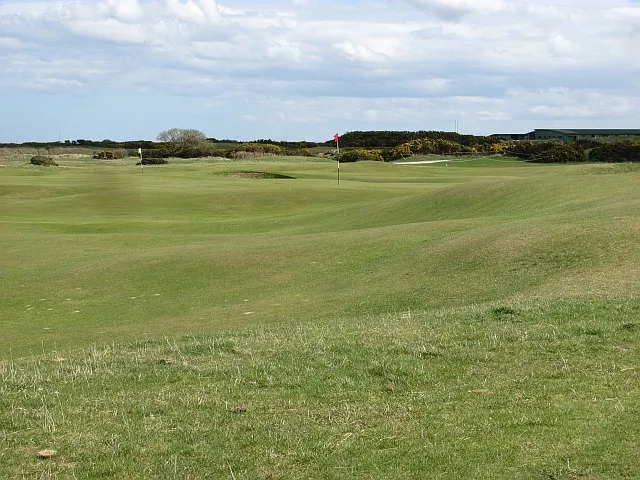
Photo: Richard Webb , CC BY-SA 2.0, via Wikimedia Commons
Golf rankings are excellent at measuring a course over eighteen holes and poor at measuring what you will remember over eighteen months. The most enduring UK golf breaks are often chosen not by the aggregate quality of a layout but by a single hole that becomes the trip's shorthand: the par three you describe to a friend, the finisher you replay in your head on the drive home, the moment when the conversation in the bar turns from weather to strategy. At The Montgomerie, we prefer to plan a break around that moment rather than around a scorecard. With the 2026 diary now open, here are six stay-and-play options where one hole justifies the journey — and where the rest of the break is good enough to make that hole feel like a climax rather than a curiosity.
St Andrews and the Road Hole
The Old Course needs no introduction, but the seventeenth needs a plan. The Road Hole is not a hole you conquer; it is a hole you survive with your dignity and your card intact. The tee shot must negotiate the hotel boundary, the approach must respect the Road Hole bunker, and the green invites the sort of misadventure that becomes a story before the putter is even replaced in the bag. Stay at the Old Course Hotel or Rusacks St Andrews and the hole becomes part of the trip's architecture rather than a distant landmark.
Who it suits: the traditionalist who wants town, history and a ballot entry rather than a single resort experience. When to go: late April to May and September to October, when the town is busy but not overwhelmed and the links has enough run to reward thought. How to shape it: two nights, a ballot entry for the Old Course, a round on the Jubilee or New to sharpen the links eye, and a caddie booked early. In 2026, treat the ballot as part of the ritual rather than an inconvenience.
Trump Turnberry and the Lighthouse Par Three
The Ailsa course at Turnberry is a theatre of coastal drama, and its ninth hole — the short hole played towards the lighthouse — is the scene that lingers. It is a par three that asks for commitment rather than length, with the sea and the light doing as much to unsettle the swing as the bunkering. Stay at the Turnberry hotel and the break has a natural rhythm: a morning round, an afternoon on the coast, a dinner that assumes you will discuss the ninth before the main course.
Who it suits: the golfer who wants a premium coastal break with a genuine sense of occasion and is content to pay for comfort as well as challenge. When to go: late May to June or September, when the light is long and the weather is more likely to behave without becoming bland. How to shape it: two nights, the Ailsa as the centrepiece, and a second round on the King Robert the Bruce course to keep the trip from feeling like a single-act performance. Request a sea-facing room if the budget allows; the walk to breakfast is part of the experience.
Carnoustie and the Eighteenth
Carnoustie is not a subtle course in the way that some links are subtle; it is a course that asks direct questions and then punishes vague answers. The eighteenth, with the Barry Burn guarding the finish, is one of the great closing holes in UK golf because it turns a scorecard into a decision. You can play conservatively and still make a mess of it; you can play aggressively and discover why the burn has ruined so many championships. Stay at the Carnoustie Golf Hotel and the final hole is quite literally on the doorstep.
Who it suits: the shot-maker who enjoys a test of nerve and does not need every hole to be picturesque in order to be memorable. When to go: August to October, when the course is firm and the wind has a proper edge. How to shape it: two nights, the Championship course as the headline, the Burnside as a warm-up and the Buddon as a loosener. Book a caddie for the Championship round; local knowledge is worth more here than at almost any other UK venue.
Celtic Manor and the Twenty Ten Finish
Celtic Manor is a resort with a Ryder Cup pedigree, and the Twenty Ten course's eighteenth hole is the sort of finisher that makes a stay-and-play break feel like a tournament week. Water and grandstand memories do much of the work, but the hole also asks a genuine question about how much risk you are prepared to take with the round already in the balance. Stay on site and the resort machinery — practice facilities, restaurants, spa — makes the trip easy to organise for a group with mixed priorities.
Who it suits: the Ryder Cup romantic and the organiser who wants a break that works for golfers and non-golfers alike. When to go: spring and early autumn, when the resort is lively without being crowded. How to shape it: two nights, the Twenty Ten as the main event, and a second round on one of the resort's other courses to keep the trip relaxed. The 2026 diary will reward those who book early and avoid the busiest school-holiday windows.
Gleneagles and the King's Course Short Hole
Gleneagles is a byword for Scottish hospitality, but the King's Course has a competitive streak beneath the heather. Its short thirteenth is the sort of hole that looks civilised from the tee and then demands a precise club and a steady head. Miss the green and the recovery is awkward; find it and the view back towards the hills is one of the finest in UK golf. Stay at the hotel and the break becomes a proper country-house affair, with the golf a centrepiece rather than the only reason for being there.
Who it suits: the golfer who wants a premium break with a heather-and-hills backdrop and a partner who values comfort as much as fairways. When to go: late May to June or September, when the heather is beginning to colour and the evenings are still long. How to shape it: two nights, the King's Course as the headline and the Queen's as the companion round. Book dinner in advance and leave room for a practice session on the short game area; the thirteenth will make more sense after twenty minutes of wedge work.
Royal Portrush and the White Rocks
The Dunluce course at Royal Portrush is links golf at its most elemental, and the fifth — White Rocks — is a par three that makes the most of the coastline rather than apologising for it. The hole is short enough to tempt and exposed enough to punish, and the surrounding dunes give the round a sense of occasion that stays with you. Stay at the Bushmills Inn or a nearby coastal hotel and the break becomes a tour of the north coast as well as a golf trip.
Who it suits: the links purist who wants championship pedigree, a proper sea wind and a reason to explore beyond the clubhouse. When to go: May to September, with early summer offering the best balance of light and weather. How to shape it: two nights, the Dunluce as the centrepiece and the Valley as a second round. Add a visit to the Giant's Causeway or a distillery tour; the best golf breaks leave room for the place itself.
The Verdict
A signature hole is not a gimmick. It is the point at which a golf break becomes a shared memory, the hole that gives the trip its title in the retelling. Choose the hole first, then choose the hotel, then choose the month. The 2026 season is already taking shape; the best breaks will be the ones where the hole you remember is the one you planned around.