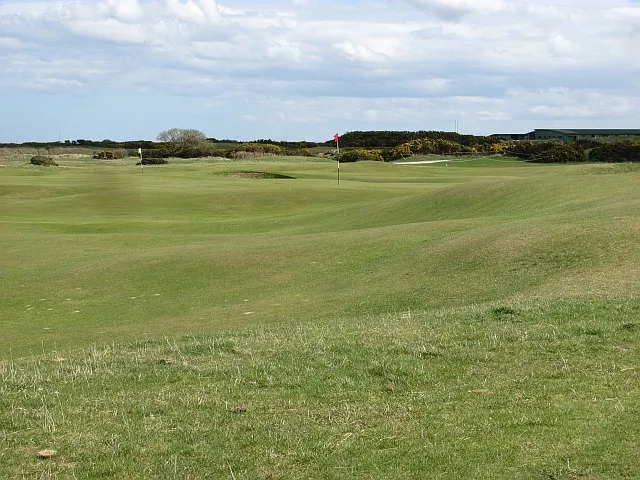
Before the First Tee: A Forty-Five-Minute Arrival Ritual for the Serious UK Club Golfer
Photo: I would appreciate being notified if you use my work outside Wikimedia. Do not copy this image illegally by ignoring the terms of the license below, as it is not in the public domain. If you would like special permission to use, license, or purchas
The first tee is the end of the preparation, not the start of it. That is an unfashionable view in a game that often treats the warm-up as a optional extra and the first hole as a place to find out what kind of day it is going to be. But watch a serious UK club golfer before a medal and you will see a routine that has little to do with hitting balls until the hands ache. The best players arrive early, move deliberately and leave the range with something in reserve. The rest of us tend to arrive late, hit twenty drivers in eight minutes and then wonder why the first three holes feel like a different sport.
The Case for Arriving Properly
A medal is not won on the first tee, but it is frequently lost there. The rushed arrival produces a fast tempo, a vague target and a mind that is still in the car park. The calm arrival produces something more valuable than a warmed-up swing: a settled nervous system. For the club golfer playing once or twice a week, the difference between a 78 and an 84 is often not technique but transitions. The forty-five-minute arrival is a transition ritual. It tells the body and the mind that the round has begun.
T-45: The Bag Check
Start with the bag, not the swing. Empty the pockets onto a bench and check the essentials: balls, tees, pitchmark repairer, ball marker, pencil, scorecard, glove, waterproofs, towel and a spare layer. In the UK, the forecast is a suggestion rather than a promise, so the waterproofs go in even when the sky is blue. Check the trolley battery, the umbrella and the shoes. A bag check is not superstition; it is the removal of small anxieties that have a habit of surfacing on the fourth tee. If you take medication or need something to eat on the back nine, pack it now rather than hoping the halfway hut will have it.
T-35: Clubhouse Timing
The clubhouse is part of the routine, not a place to hide from it. Sign in, pay any competition entry, check the noticeboard for local rules and confirm your tee time. Keep the food light: a banana, a cereal bar, a coffee if you know how it affects you. A full cooked breakfast before a medal is a gamble that most golfers lose. Use the facilities, change your shoes in comfort and leave the phone in the bag unless you are genuinely on call. The aim is to arrive at the practice area with time in hand and nothing unfinished.
T-25: A Warm-Up With a Purpose
The range is where good intentions go to die. Hitting balls without a plan is not a warm-up; it is a workout for the ego. Spend the first few minutes on movement rather than mechanics: gentle rotations, hip openers, shoulder turns and a few easy swings with a short iron. Then hit no more than twenty-five balls with a clear sequence: wedges to find the bottom of the swing, mid-irons to establish rhythm, two or three hybrids or fairway woods to check the transition, and a handful of drivers at the end. Finish with the club you will use on the first tee, not the one you wish you could hit.
T-15: Putting-Green Reconnaissance
The putting green is the most underused source of information in UK club golf. Before you roll a single ball, watch two or three putts from different parts of the green. Note the pace, the grain and the general borrow. Then hit three long putts to the fringe to calibrate speed, three putts from four feet to check the start line and three breaking putts to remind yourself that the ball does not travel in straight lines. If there is a chipping green, hit five chips to a specific target. The aim is not to find your stroke; it is to find the speed of the greens.
T-8: First-Hole Strategy
Stand on the first tee with a plan rather than a hope. Look at the card, identify the danger and choose the club that takes it out of play. On most UK club courses, the first hole is not a driver hole in the way the scorecard suggests. It is a hole that rewards a specific shape, a specific side of the fairway and a specific level of aggression. Decide where you want to miss it, pick a target that is small enough to focus on and commit to the shot. If the wind is up, take one more club than you think and swing more smoothly. The first hole is not the place for a hero; it is the place for a routine.
T-3: The Tee-Box Ritual
By the time your name is called, the work should be done. Stand behind the ball, pick a distant landmark, take one breath and visualise the shot. One practice swing, not three. Then step in, set up and go. The temptation is to add a last-minute swing thought, but the last minute is for commitment, not correction. If you have followed the routine, you are as ready as you are going to be. The first tee is not a laboratory; it is a starting line.
The Quiet Principle
The forty-five-minute arrival is not about doing more. It is about doing things in the right order. Bag check, clubhouse, warm-up, putting green, first-hole strategy, tee-box routine: each step removes a small uncertainty and leaves you with a clearer mind. The 2026 season will bring enough uncertainty from the weather, the course and the opposition. Arrive properly and you give yourself the best chance of playing the round you actually prepared for.