Where Winter Golf Still Feels First-Class: Fifteen UK Breaks Built for Frost and Squall
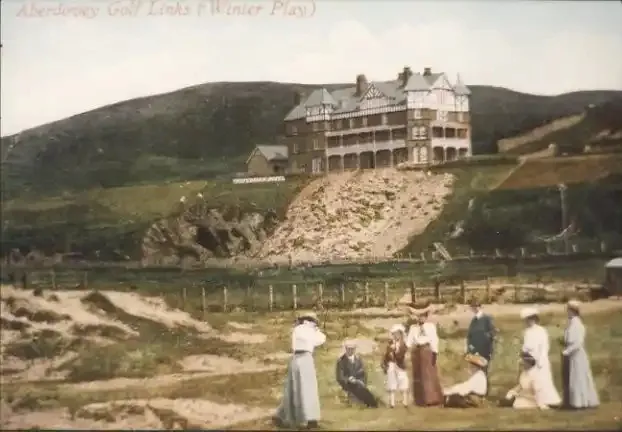
Photo: Trefeddian Hotel, CC0, via Wikimedia Commons
For an island whose golf season is routinely described as twelve months long, Britain spends a good deal of November hedging its bets. Courses that look immaculate in June can turn porridge-thick after three days of drizzle, and a single sharp frost can leave the best-laid plans of a winter golf break sitting in the car park. The answer is not optimism. It is selection: venues whose ground was built to shed water, whose greenkeeping team keeps a shortened winter course honest, and whose clubhouse makes four hours in a cold wind feel like a fair exchange.
Hence our frost-proof fifteen for 2026, a working shortlist for the golfer who wants a round in the diary between now and March without gambling on the weather.
Drainage Beats Pedigree
Links turf is the obvious starting point, and for good reason. Sand-based ground takes rain and gives it back, and the fescue and bent grasses that thrive on it stay firm underfoot when inland fairways are closing their gates. But not every seaside course drains alike, and a few celebrated names are better in July than in January.
What separates the reliable winter venues is greenkeeping policy as much as geology. A club that plans for temporary greens, keeps a full winter tee sheet, publishes a daily course status, and refuses to let the fairways be churned by trolleys after a wet week is worth more than one with a famous trophy cabinet and a locked gate.
Look, too, for a genuine winter card: measured tees, forward flags on the shorter holes, and a rate that reflects the conditions. A premium venue does not pretend that winter golf is summer golf. It prices and presents it honestly.
The Kent Coast
Prince's, between Sandwich and Deal, is the natural first call. Its three loops share the same duneland, and the Montgomerie nine has had well over a decade to settle into the contours, with wide fairways that forgive a thin strike in cold air and greens that stay playable rather than glassy. In a winter wind the place is a serious test and a fine walk.
Royal Cinque Ports, a few minutes along the coast, offers one of the purest winter links experiences in England: fast-draining, beautifully bunkered and refreshingly free of pretence. Littlestone, further south in Kent, provides the same virtues at a gentler price, with a run of holes along the sea wall that stands up in any month.
Norfolk and the East
Hunstanton is the connoisseur's winter pick, its heathland-and-links blend running firm even after heavy rain. Royal West Norfolk at Brancaster is more elemental still, cut off by the tide and entirely uninterested in modern convenience, which is precisely its charm. Both courses reward a low, running game and punish anything floated into the wind.
Lancashire's Sand Belt
The Southport hinterland contains one of the densest concentrations of winter-proof golf in Britain. Hillside, Formby and West Lancashire all sit on deep sand, all drain superbly, and all offer the particular pleasure of a links round in a bitter north-westerly followed by a clubhouse that knows how to feed and warm a fourball properly. Winter rates here are among the best value in the premium market.
Ayrshire and East Lothian
Scotland's contribution begins with Prestwick, where the ground is as quick in December as in June and the history is worth the trip alone. Western Gailes, squeezed between the railway and the shore, is a classic winter examination of ball flight and patience. On the other coast, Dunbar and North Berwick offer East Lothian links golf with short winter days in mind; both are comfortably walkable in under four hours when the light is thin.
Heathland's Quiet Advantage
Inland golf is not automatically a write-off. Woodhall Spa, Ganton and Walton Heath all sit on sandy, heather-fringed soil that copes far better in wet weather than the heavy parkland of the Midlands and the clay belts. Walton Heath, in particular, is playable when much of Surrey is not, and its two courses give a winter society day genuine flexibility. The Hotchkin at Woodhall Spa remains a stern and beautiful test even with the heather dulled by frost.
Booking and Packing
Book direct where you can, and ask two questions plainly: what is the winter policy on temporary greens, and is there a reduced rate when the course is restricted? Then build flexibility into the trip. Frost delays are common from December to February, so a later tee time and a venue within an hour of your bed for the night is sensible.
Pack for layers rather than bulk: a merino base, a mid-layer, a genuinely waterproof outer shell, waterproof socks, mittens and a hat you would wear in the Alps. Halve the set and carry. A Sunday bag with nine clubs and a flask will add more to your enjoyment than fourteen clubs and an argument about trolley bans.
Adapting to the Winter Game
Cold air is dense and wet turf kills run, so take one more club than the yardage suggests and expect the ball to fly lower than in summer. Play the ball back a fraction, favour a three-quarter swing, and accept that the low, chasing approach is often the smartest shot on the card. Around the greens, frost and firmness make the lob wedge a liability; a bumped eight iron from the fringe is the percentage play. On the putting surfaces, hit putts more firmly than usual and read less break than you think, because cold, slow greens take borrow grudgingly.
Finally, adjust the scorecard to the day. Two clubs of wind, soft turf and a temporary green should change your target, not your temperament. Winter golf rewards the golfer who plays the course as it is, rather than the one still waiting for the course they played in August.