The Ground Beneath the Round: Choosing a UK Golf Break by Its Walk
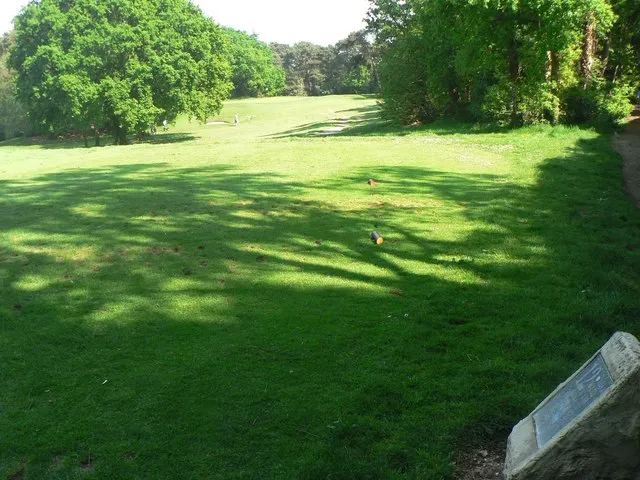
Photo: Chris Downer, CC BY-SA 2.0, via Wikimedia Commons
Rankings are a useful shorthand. They condense conditioning, design and championship pedigree into a number that travels well across a dinner table. But they say almost nothing about the texture of a golf break: the ease of a morning tee time, the twenty minutes between the eighteenth green and the bar, or the manner in which a course reveals itself as you walk it. For the serious club golfer planning a 2026 break, the ground beneath the round deserves as much scrutiny as the course's position in a list.
The Walk as a Measure of Curation
Walk quality is rarely accidental. It is evidence of how a venue thinks about its guests. A well-made path, a sensible bridge over a burn, a bench placed where the view opens rather than where the mower happens to turn: these are small civilities, but they add up to a day that flows. A course that invests in them is usually a course that understands pace of play, accessibility and the simple pleasure of arriving at the next tee without irritation.
The reverse is equally telling. A routing that sends golfers up and down the same bank, a tee-to-fairway transfer that demands a scramble over a ditch, or a stretch where the only bench is a broken picnic table speaks of a venue that has thought mainly about the card. That may still be a fine course. It is not necessarily a fine break.
This is not an argument against challenge. A serious club golfer wants a course that asks questions. But challenge and discomfort are different things. A links can be exacting and still walk beautifully. A parkland can be gentle and still be a tiresome trudge if the paths are poor and the gradients unconsidered. The walk is where design, maintenance and hospitality meet.
Practical Checks Before You Book
Begin with the map, but do not stop there. Look at the sequence of holes and ask where the long transitions fall. A course that returns to the clubhouse at the turn is easier to manage than one that strands you at the far end of the property with a distant halfway house and a single toilet. Check the elevation profile if the venue publishes one, and read recent reviews for mentions of walking rather than condition alone. 'A tough walk' is a useful phrase; 'a lovely walk' is more useful still.
Ask about surfaces. Fine gravel, mown grass paths and boardwalk are all different propositions in wet weather. A UK break in 2026 may be booked for high summer, but the British climate has a way of inserting a squall into the most carefully arranged itinerary. A course that drains well and has firm, well-drained paths will be a better companion than one that turns its walk into a series of evasive actions.
Ask about trolleys and caddies. Some venues restrict trolleys in winter or on certain slopes; others offer caddies who know the shortcuts and the etiquette of a quick round. Ask where the benches are, literally and figuratively. A bench at the seventh and another at the fourteenth is not a luxury; it is a pacing tool. Ask, too, whether the hotel is genuinely walkable to the first tee. A stay-and-play break loses some of its ease if every round begins with a car journey.
Finally, consider the bridges. They are small pieces of architecture, but they control rhythm. A narrow bridge at a shared crossing can create a bottleneck; a well-placed bridge opens a view and gives the walk a moment of theatre. The best courses use these transitions as punctuation.
Where the Journey Earns Its Place
Several UK venues understand that the walk is part of the product. The Montgomerie Course at Celtic Manor, near Newport, is a broad woodland test with a hotel base that makes the break feel coherent rather than assembled. It is not a gentle stroll, but the routing has a logic to it, and the transitions between holes are part of the day rather than an interruption.
Gleneagles, in Perthshire, remains the obvious example of a Scottish break where the ground is as considered as the golf. The King's and Queen's courses offer paths, benches and views that make the walk feel curated, and the estate setting allows a golfer to move between rounds without the usual friction. Woodhall Spa, in Lincolnshire, offers a heathland walk of unusual character: the Hotchkin is demanding, but the ground beneath it is largely kind, and the paths and clearings give the round a sense of order.
For a wilder version, the Machrie on Islay rewards those who accept that the walk is part of the challenge. Dunes, bridges and exposed ground make it a different proposition from a parkland stroll, but the journey between shots is memorable in its own right. Trump Turnberry, on the Ayrshire coast, supplies the grander version: a coastal walk with wide skies, strong transitions and a hotel that makes the break feel complete.
The Ranking's Proper Place
None of this argues that ranking is irrelevant. A course's design pedigree and conditioning still matter, and a golfer should not book a poor course simply because the paths are pleasant. But the ranking is a single measure, and a golf break is a composite experience. The walk affects pace, mood, conversation and stamina. It determines whether the second round of the day feels like an opportunity or an obligation.
For a 2026 break, add a walkability line to the shortlist. Note the gradients, the path surfaces, the bench count and the transitions. Ask whether the venue has thought about the golfer who arrives with a trolley, a bad knee or simply a preference for a civilised rhythm. The answers will tell you something a ranking cannot. They will tell you what the day will actually be like.