A Proper Pause: Why the Halfway House Deserves a Place in the Round
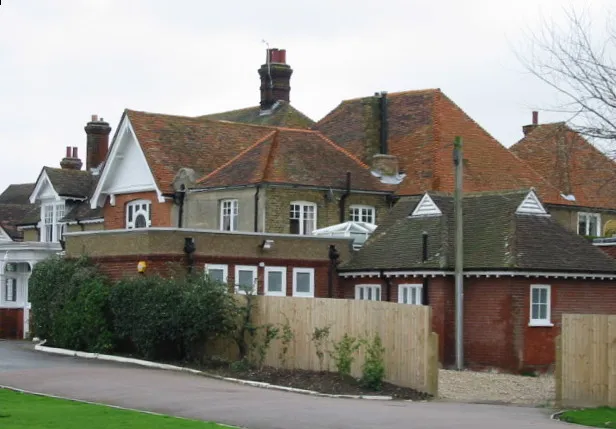
Photo: Nick Smith, CC BY-SA 2.0, via Wikimedia Commons
A UK golf break is usually planned around the broad strokes: the tee time, the room, the dinner, the second round. The halfway house rarely makes the itinerary. It should. At its best, the turn is the quiet hinge of the day, a ten-minute pause that restores order before the back nine asks its harder questions. At its worst, it is a queue, a card machine and a lukewarm paper cup, and the round never quite recovers.
The Difference Between a Turn and a Transaction
A proper halfway house feels like part of the club. It has a view of the ninth green or the tenth tee, a place to set down a scorecard, and staff who understand that golfers arrive in bursts rather than a steady stream. It offers something warm, something quick and somewhere to sit. It does not need linen napkins or a wine list. It needs competence.
A glorified kiosk, by contrast, treats the turn as a retail opportunity. There is a fridge, a till and a bin, but no shelter from the wind and no sense that anyone thought about the golfer who has just played nine holes in a squall. The difference is rarely about money. It is about whether the club has decided that hospitality at the turn matters.
That distinction becomes sharper on a golf break. When a golfer has travelled, paid for a stay and looked forward to the day, a poor turn feels like a small betrayal. A good one feels like proof that the club understands why people play.
Timing Is the Real Menu
The most important item at any halfway house is not the bacon roll. It is time. A four-ball that stops for twenty-five minutes can lose the rhythm of the round and the goodwill of the group behind. A two-ball that stops for four minutes may as well not have stopped at all. The best clubs manage this without fuss: pre-order slips at the first tee, a hot hold that actually holds, service that begins before the golfer reaches the counter.
Golfers planning a break should ask about the turn when they book. Is the halfway house open on the day? Can food be pre-ordered? Does the package include refreshments, or is it a separate arrangement? In winter, is there somewhere sheltered to sit? These questions take a minute and save an hour of quiet frustration later.
There is also a matter of expectation. A club that cannot serve a decent bacon roll promptly should not advertise itself as a golf-break destination. It is a small test, but it is revealing. The turn is where a club's operational discipline meets its hospitality.
What a Good Halfway House Actually Serves
The menu should be short enough to execute and broad enough to satisfy. A bacon roll, a sausage bap, soup, a sandwich, tea, coffee and water will carry most UK golf days. A tray of chips is welcome in the right setting. A full carvery is not. The point is not choice; it is reliability.
Dietary needs deserve more than a shrug. A vegetarian option and a gluten-free biscuit are not extravagant requests in 2026. Nor is a jug of water that is actually replenished. The clubs that get this right tend to display the same quiet confidence they show on the course: nothing ostentatious, nothing overlooked.
Three Signs a Club Understands the Turn
First, the halfway house is visible from the ninth green or the tenth tee. Golfers should not have to hunt for it. Second, there is somewhere to sit that is not a windowsill. Third, the service is organised around the field rather than the till. A club that understands the turn will have a system for a busy Saturday morning and a plan for a quiet Tuesday afternoon.
To that I would add a fourth: the stop does not feel like a favour. Staff should not sigh when a four-ball arrives together. Golfers should not feel rushed because the group behind is already on the tenth. A halfway house is a service, not a concession.
Planning a 2026 Break Around the Pause
For the 2026 season, the halfway house is worth factoring into the shape of a break. On a thirty-six-hole day, the turn between rounds is not simply lunch; it is the reset that determines whether the second round is played with appetite or resentment. On a winter break, shelter and warmth matter as much as the speed of service. On a stay-and-play visit, the turn is part of the club's character, not an aside.
It is also worth remembering that the halfway house is not the clubhouse. It should not try to be. The best turns are modest, well-run and entirely in keeping with the course. They understand that the golfer is still playing, not yet dining.
The Back-Nine Contract
A round of golf has two halves, but they are rarely equal. The front nine is often played on expectation; the back nine is played on whatever the turn has left in the tank. A calm, well-timed pause can settle a nervous group, cool a heated one and send everyone to the tenth tee with a clearer head. A poor turn does the opposite. It introduces hurry, hunger and mild indignation into a game that already has enough of all three.
The halfway house will never be the reason a golfer books a UK break. But it can be the reason a day feels complete. The clubs that understand this do not treat the turn as an interruption. They treat it as part of the round, and the round is better for it.