The Eighty-Yard Contract: Building a Wedge Shot You Can Trust
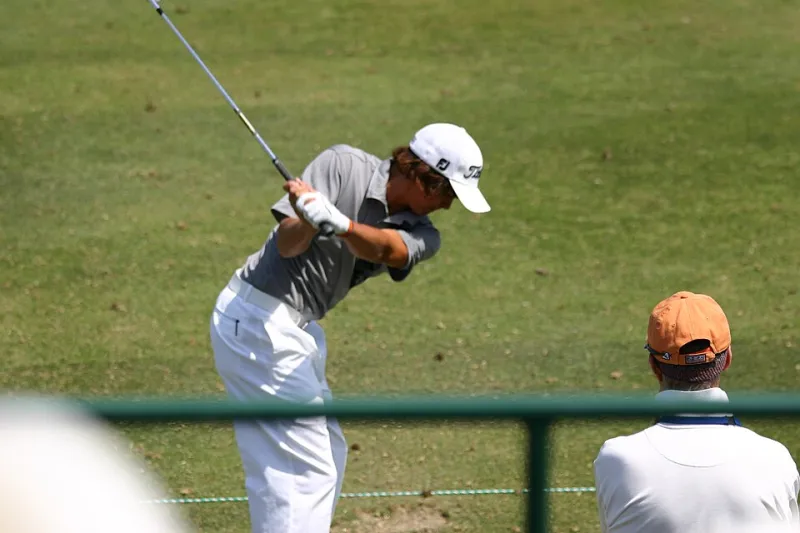
Photo: Flash and Mel from San Diego, CA, USA, CC BY-SA 2.0, via Wikimedia Commons
Eighty yards is not a long shot. It is, however, one of the most awkward distances in club golf. It sits between the full swing and the half swing, between the confident wedge and the tentative flick. On a Montgomerie-style approach, where angles and green fronts ask questions of the player, the 80-yard wedge can decide whether a good drive is converted into a birdie chance or wasted by a thin shot through the back.
The answer is not a harder swing. It is a repeatable three-quarter action, built in practice and trusted on the course.
Why the Full-Swing Number Misleads
Launch-monitor numbers are useful, but they are not a strategy. A club golfer may know that a full 58-degree wedge carries 85 yards on a calm day at the range. On the course, with a tight lie, a damp UK fairway and a breeze from the left, that number becomes a hope rather than a plan. A full swing at 80 yards asks for a perfect strike. A three-quarter swing asks for a repeatable one.
Full wedges also flight higher and spin more, which is not always helpful in wind. The ball can balloon and fall short, or land steeply and spin back off a firm green. The three-quarter action produces a flatter, more controlled trajectory. It reduces the temptation to decelerate, which is the real cause of most poor wedge shots. When a golfer tries to take something off a full swing, the body often slows and the hands take over. The result is a shot that is neither full nor controlled.
The Three-Quarter Action, Defined
The three-quarter wedge is a system, not a feeling. Start with a slightly narrower stance and the ball a fraction back of centre. Put a little more weight on the left side at address and grip down half an inch. The grip change is not cosmetic; it shortens the club and gives the player a sense of control.
Make a backswing that takes the hands to about hip height, or nine o'clock on the clock face. The wrists should set naturally but not excessively. From there, turn through to three o'clock, keeping the chest moving and the hands quiet. The finish should be low, with the clubhead passing the hands rather than the hands flipping past the clubhead. The goal is a predictable carry, not a pretty finish.
Tempo matters more than length. A three-quarter swing made at the pace of a long putt will usually produce a better result than a quick, jerky action. The player should feel the club brushing the turf or mat rather than digging into it. The sole of the wedge is designed to glide; a steep, handsy strike defeats it.
Three Drills for Winter Mats and Summer Turf
1. The clock ladder. On a winter mat, set three targets at 60, 70 and 80 yards. Use the same club and vary only the length of the backswing: hands to hip height, chest height and shoulder height. Hit three balls to each target. On summer turf, use flags or towels instead of range markers and repeat the sequence. The drill teaches the player to associate a backswing length with a carry distance rather than a full-swing number.
2. The landing-spot coin. Place a coin or a small towel at the intended landing area and ignore the flag. Hit ten three-quarter wedges and count how many finish within a club length of the target. On a mat, focus on the strike and the start line. On turf, vary the lie — uphill, downhill, bare and grassy — to see how the action holds up. The drill builds a landing-spot mindset, which is how the shot should be played on the course.
3. The feet-together hold. Hit twenty three-quarter wedges with the feet almost touching. Hold the finish for three seconds. On a winter mat, concentrate on brushing the mat rather than hitting at the ball. On summer turf, concentrate on balance and a shallow divot. If the player cannot hold the finish, the swing was too long or too fast. The drill is a simple test of control.
When to Take It On and When to Run It Back
Montgomerie-style approaches often present a green that looks closer than it is. The front may be guarded by a bunker, the pin may be tucked behind a ridge, and the wind may be stronger than it feels from the fairway. The 80-yard wedge is worth taking on when the lie is good, the pin is middle or front, the wind is manageable and the green is soft enough to hold a controlled shot. In those conditions, the three-quarter wedge is the percentage play.
Run it back when the lie is tight, the pin is tucked, the wind is across, the green is firm or a short bunker shot would be difficult. Running it back does not mean giving up on the hole. It can mean laying back to 100 or 110 yards with a fuller club, or using a low 8-iron bump-and-run to a front pin. The aim is to leave a putt, not to prove a point. Course management is not cowardice; it is arithmetic.
The club golfer should also resist the hero recovery. From a poor lie at 80 yards, the three-quarter wedge may be the wrong club entirely. A hybrid or a putt from the fringe may be the smarter route. The scorecard does not reward elegance; it rewards the number.
The Club Golfer's Contract
Choose one wedge, one clock and one tempo. Practise the three-quarter action until the carry is predictable. Use it when the percentages favour it and lay back when they do not. The 80-yard shot is not the hero shot. It is the shot that keeps a good round together, and on a course that asks for angles and patience, that is worth more than distance.