Arriving as a Guest, Leaving as a Member: The Quiet Art of the Away Day

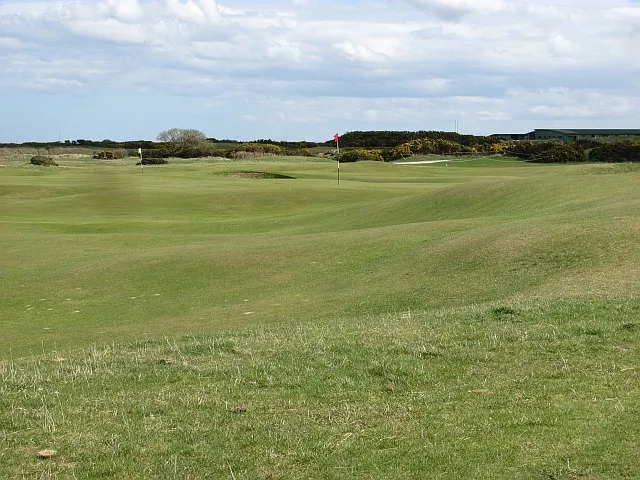
Photo: RoverTheBendInSussex, CC BY-SA 3.0, via Wikimedia Commons
There is a particular kind of discomfort reserved for the visiting golfer at a great course. It has nothing to do with ability and everything to do with uncertainty: where to park, whether the spikes go on in the car or the changing room, whether the card in your hand reflects a course you can actually play. None of it is difficult. All of it is avoidable, and the golfers who enjoy away days most are simply the ones who have done their homework.
What follows is a considered guide to the small decisions that make a first visit feel natural — etiquette without the stuffiness, preparation without the anxiety.
Before you book: four questions worth asking
A phone call or a short email to the professional's shop will settle more than the website ever will. Ask, in this order.
- What is the realistic pace and the expected time? Championship courses can play long on a Saturday morning. Knowing whether the tee sheet is tight or generous shapes your travel plans and your breakfast.
- Is there a handicap requirement? Many UK clubs have relaxed formal evidence, but a handful of notable courses still ask for a certificate or a WHS index. Turning up without one is a needless risk.
- What are the practice facilities and when do they open? A twenty-minute warm-up on a decent range changes the first three holes entirely.
- What are the catering timings? The half-way house may close at three; the dining room may want numbers for lunch. A single question prevents the awkward arithmetic of a group arriving at 3.15pm expecting hot food.
Ask also about caddies and buggies. Caddies are not universal in the UK in the way they are in Ireland's links or at the great American resorts, but at several premium venues — including the Montgomerie-designed resorts — they can be arranged with notice. Buggies are frequently restricted to medical use or limited to certain months. Neither answer should be assumed.
Reading the card before you commit to a tee
Stand on the first tee with the card in hand and the wrong markers chosen, and the day becomes an exercise in recovery. The card is, however, an honest document if you read it properly: total yardage, par, stroke index and the length of the par threes will tell you within thirty seconds which set of markers flatters your game.
A useful rule of thumb: multiply your typical five-iron carry by thirty-six. It is a crude calculation, but it lands most club golfers within a few hundred yards of the right tee. Where a composite or hybrid card is offered, take it seriously — it is usually the committee's own acknowledgment that the full course is more than most visitors need.
Nobody on the terrace is watching which marker you chose. They are watching whether you keep up.
Caddie, trolley or carry
On a flat parkland course in July, carrying is a pleasure. On a 7,000-yard layout with three climbs in the back nine, it is a decision you will regret by the twelfth. Trolleys are almost always available; electric trolleys increasingly so. If you take a caddie, brief him properly on the first tee: your handicap, your shot shape, and whether you would rather be told the number or the club. A good caddie will save you three shots and improve your understanding of the course by half.
If you take a caddie, remember that the gratuity is customary and is best handled discreetly at the eighteenth, not negotiated at the first.
Learning the shape of a Montgomerie course
Montgomerie-designed courses tend to share a set of characteristics worth knowing before you play. The bunkering is placed at driving distance, often at the corner you would naturally favour, so the line that looks generous from the tee is frequently the one that finds sand. The land is used at scale — wide fairways, large greens, and run-off areas that gather the slightly mis-hit approach and send it fifteen yards away.
Three consequences follow. First, take the club that keeps you short of the fairway bunkers and accept the longer approach; the greens are usually large enough to receive it. Second, pay attention to the shape of the green rather than the flag, because the safe side is often the wider half. Third, and least intuitive, putt from the surrounds where the lie allows. The run-offs are mown tight by design, and a putter from five yards off the green is often the percentage play.
Wind, where it exists, is part of the architecture. Take one more club than the yardage suggests into the breeze and accept that downwind holes require position rather than power.
The clubhouse, handled quietly
The rules of the clubhouse are almost never written down and are almost always obvious once observed. Arrive with time to spare. Change shoes in the changing room rather than the car park. Sign the visitors' book if there is one. Introduce yourself to the professional and the starter; both will remember it, and both can improve your day.
Dress codes in the UK remain conventional and are published on every club's website. A collared shirt, tailored trousers or shorts, and shoes that are not trainers will see you through almost every clubhouse in the country. Mobile phones belong on silent and off the course. At the bar, order at the bar, and offer to buy the first round before the group disperses to change. If a meal has been arranged, settle the bill before the coffee rather than after it.
None of this is ceremonial. It is simply the courtesy of a guest who has taken the trouble to notice how the house works.
The eighteenth, and the car park
Thank the starter on your way in and the professional on your way out. Leave the locker room as you found it. If you have hired clubs, return them clean. And if the day has been good — which, on a well-chosen away day, it usually is — say so, in person, before you leave. A short note to the secretary afterwards is rarer than it should be and is remembered for years.
The measure of a great away day is not the score. It is whether, at the eighteenth, you feel less like a visitor than you did at the first. That is a matter of preparation, a respect for the architecture, and a handful of small courtesies — and it is entirely within the gift of any golfer willing to do the reading beforehand.