The Second Scorecard: Why the Academy Nine Belongs in the Plan

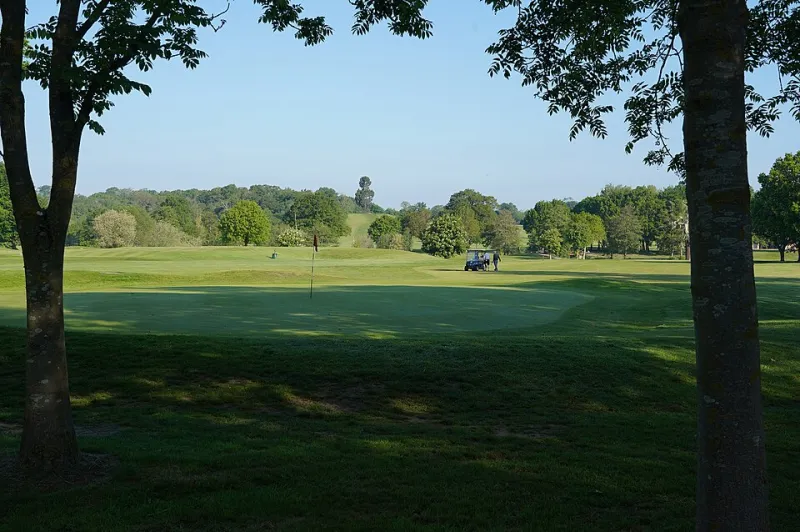
The main course gets the planning. It gets the yardage book, the pre-trip debate about tees and the careful calculation of how many holes can be squeezed into arrival day. The academy nine, by contrast, is often treated as a footnote: something to mention at check-in, perhaps, and then quietly forget. That is an odd way to approach a golf break, particularly at a UK venue where the short course may be the most revealing piece of golf on the property.
A different examination, not a lesser one
There is a temptation to treat a par-three or academy course as golf in miniature. It is not. A well-built short course asks precise questions with a wedge and a putter, and it asks them quickly. Distance control becomes the whole game. A slightly thinned approach that would finish twenty yards short of a green on the main course is simply in the bunker here. A pulled wedge that would find a safe apron elsewhere is suddenly a lost ball or a difficult up-and-down.
That is why the short course is such a good companion to a serious round. It strips away the comfort of length. The club golfer who can carry a driver 230 yards but cannot reliably flight a 70-yard wedge is exposed in a way that a full-size course often disguises. The academy nine does not care about your best drive of the day. It cares whether you can land the ball where you intended, with the club you rather hoped you would not need.
The best short courses share the honesty of a good Montgomerie layout: the questions are visible, the penalties are clear, and the score is earned rather than rescued. That makes them valuable. It also makes them enjoyable in a way that a draining second eighteen rarely is.
The warm-up that actually warms you up
The driving range has its place, but it is a poor rehearsal for golf. Hitting balls from a flat mat into a distant field does not prepare you for sloping lies, awkward winds, tucked flags or the small humiliation of a three-putt from twelve feet. Nine holes on the academy course does.
On arrival day, the short course is the ideal first appointment. It shakes off travel stiffness, gives you a look at the greens and reveals the speed of the putting surfaces before the main round. It also provides useful data without demanding a full scorecard. You learn whether your wedge is spinning or releasing, whether the ball is travelling the expected distance in the afternoon air, and whether your putting stroke is suited to the pace of the resort greens. That is more useful than another twenty range balls and a hopeful stretch.
There is a practical benefit too. A short course takes roughly ninety minutes to two hours, depending on the venue and the traffic. It fits neatly into the gap between arrival and dinner. It does not leave you fatigued for the following morning. And it gives the trip a gentle competitive shape before the main event begins.
Score it, and mean it
The academy nine deserves a card. Not because every round must be a competition, but because keeping score changes the way you play. A casual wander around a par-three course can become a series of half-hearted wedges and gimme putts. A proper card, even a modest one, sharpens the attention.
There are several ways to make the short course count. Play a two-club challenge with a wedge and a putter. Set a target number of greens in regulation, however modest the yardage. Play matchplay against your travelling companion, with a pound or a coffee at stake. Or simply record your score and compare it with the main course: the gap between the two often says more about your game than either card alone.
The short course is also a fine place to test something you would not risk in the main round. A different wedge bounce, a changed putting grip, a more conservative line into a small green. The consequences are low, the feedback is immediate, and the lessons travel well.
Where the little course earns its green fee
Several UK stay-and-play venues have short courses that are worth booking in their own right. Gleneagles has its Wee Course, a charming nine-hole layout that is ideal for a first afternoon and far more than a warm-up. Trump Turnberry has the Arran course, a nine-hole test that offers sea air and a useful change of scale from the main links. The Belfry's Derby course gives the resort a shorter option alongside its championship layouts, and St Andrews has the Balgove, a par-three course that is a fine introduction to the town's golfing rhythms without asking for a full links examination.
The point is not to replace the main course. It is to use the second course properly. Ask at the time of booking whether the academy or short course is available, whether it requires a separate tee time and whether clubs can be carried rather than trolleyed. At many venues the answer is straightforward, but the short course is often omitted from the standard reservation conversation because so few guests ask.
The dividend
A UK golf break is an investment of time, money and anticipation. The main course is why you came. The short course is how you leave sharper, calmer and perhaps a little happier. It is the second scorecard, the quiet round, the one that asks for a wedge and a putter rather than a driver and an excuse.
In the 2026 season, with tee sheets busy and weekends precious, the academy nine is not a distraction from the main event. It is the smartest round of the trip. Put it in the plan.