No Boot, No Baggage: Six UK Golf Breaks Built Around the Railway Timetable
The case for letting the train carry the clubs
A golf break is usually judged by the course, the hotel and the weather. The journey is tolerated rather than planned. For the club golfer, though, the journey shapes the round. A boot full of shoes, waterproofs and half a dozen spare balls, a motorway closure and a rushed check-in can undo a fortnight of anticipation before the first tee shot.
Rail changes the arithmetic. It removes the driving, the parking and the post-round reluctance to move the car. It also imposes a useful discipline: pack for the trip rather than for every conceivable weather system. The result is not a hair-shirt exercise. It is a quieter, more civilised way to reach some of the best golf in the United Kingdom, provided the itinerary is built around the railway rather than bolted onto it.
The six breaks below are chosen for that reason. Each has a station within a sensible transfer of the clubhouse, accommodation that works without a car, and enough golf to justify the journey. Timetables and transfer arrangements should be checked before booking, particularly at weekends and during engineering works, but the principle holds: arrive relaxed, on time and ready for the first tee.
Packing for the platform, not the pavement
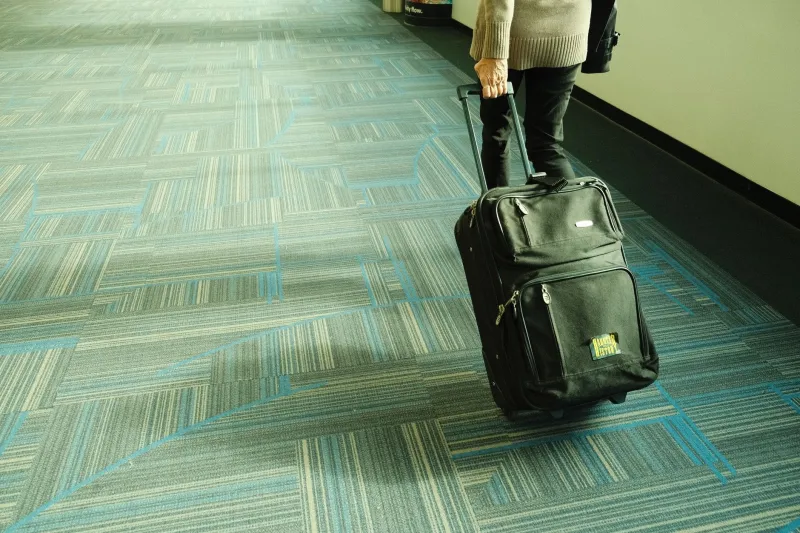
Most UK train operators accept golf clubs as luggage, but space is finite and not every service is generous. A hard travel case is reassuring on a long journey and awkward in a crowded vestibule. A slim carry bag with a hood is easier to stow and easier to move between platforms. The practical answer is often a lightweight travel cover over a stand bag, with shoes and waterproofs packed separately in a small holdall.
Reserve a seat where possible and check the operator's luggage guidance in advance. On longer routes, a luggage-transfer service from home to clubhouse can be worth the expense, leaving the golfer with only a small case and a day bag. It is not indulgence for its own sake; it is the difference between a composed arrival and a platform wrestling match.
Finally, treat the station-to-clubhouse leg as part of the break. A pre-booked taxi is usually better than a hopeful rank on a Sunday evening. Some clubs and hotels offer shuttle arrangements for guests, but these should be confirmed rather than assumed. The aim is simple: clubs delivered, room found, shoes dried, dinner booked.
Gleneagles: the station at the end of the drive
Gleneagles is the benchmark for rail-borne golf in Britain. The station sits on the estate, and the transfer to the hotel is short enough to feel like an extension of the arrival rather than a separate journey. The golf needs little introduction: the King's and Queen's courses, the PGA Centenary and a clubhouse culture that suits a long weekend.
For a car-free break, the appeal is the containment. Arrive by train, check in, play, dine and repeat without touching a car key. The estate is large enough to justify the shuttle, and the railway line makes a two-night stay feel longer than the calendar suggests. Book tee times and transfers together, and keep the first round light: a late-morning start after an early train is preferable to a sprint from platform to practice green.
Carnoustie: links golf without the car park
Carnoustie has its own station, and the Championship course and hotel sit close enough to make the walk or short transfer straightforward. This is links golf in its sternest form, but the rail approach softens the edges. The golfer arrives with the sea air already in the frame and no need to negotiate the town's parking on a championship morning.
A sensible itinerary pairs Carnoustie with a second round on one of the adjacent courses rather than trying to cram in too much. The Buddon Links and the Burnside course offer useful variety, and the hotel's position means dinner is a short walk from the room. Check tide and weather rather than assuming a calm day; links golf by rail is still links golf.
St Andrews: the shuttle from Leuchars
St Andrews does not have a station in the town, but Leuchars is a short taxi or bus ride away and the journey is well trodden. The reward is the most complete golf town in the world: the Old Course, the New, the Jubilee, the Castle and a hotel stock that ranges from grand to practical.
For a rail break, the key is to book accommodation near the centre and to arrange the Leuchars transfer in advance. Clubs can be left at the hotel or at the course; the town is compact enough to walk. A two-night stay allows one round on the links and one on a secondary course without turning the trip into a tick-box exercise. The railway does not make St Andrews cheap, but it does make it simpler.
Sunningdale: the commuter line to classic heathland
Sunningdale station is almost at the gate of one of England's most celebrated golf clubs, and the surrounding heathland belt offers a concentration of courses that rewards a short stay. The Old and New courses at Sunningdale are the headline, but Wentworth and Swinley Forest are within reach by taxi.
This is a break for the golfer who wants quality over quantity. Stay locally, travel light and use the train for the final approach. The station-to-clubhouse transfer is short, and the clubhouse itself provides the sort of lunch that makes a post-round train feel almost too soon. Book tee times well ahead and confirm visitor arrangements; this is not a destination for the casual walk-up.
Royal Liverpool and Hoylake: the Wirral by rail
Hoylake station is a short walk from Royal Liverpool, and the wider Wirral and Liverpool area offers enough accommodation and golf to support a car-free weekend. Royal Liverpool is the main draw, but West Lancashire, Formby and Wallasey provide worthy companions.
For a rail itinerary, base in Liverpool or Hoylake and use the Merseyrail network. The station-to-course walk is one of the simplest in UK golf, and the town has a quiet, residential feel that suits an early tee time. The return journey after a round is equally straightforward, which matters more than it sounds when clubs are damp and the light is going.
Prestwick: the old course by the platform
Prestwick is another rare example of a championship course that sits close to the railway. The station is in the town, and the club is a short transfer away. Prestwick's Old Course is historic, quirky and deeply enjoyable, and the Ayrshire coast offers Royal Troon and Western Gailes within a reasonable taxi ride.
A rail break here can be built around two nights and two rounds, with the train doing the work between Prestwick and Troon. The town is not fashionable in the manner of St Andrews, but it is practical, friendly and well served by the line. The golfer who values atmosphere over polish will find much to like.
The timetable as a caddie
A rail-first golf break will not suit every trip. Remote links and hidden heathland courses often demand a car, and some clubhouse transfers are simply too awkward to pretend otherwise. But where the line runs close, the railway is a useful caddie: it sets a pace, limits the clutter and delivers the golfer to the first tee with something precious in reserve. The clubs arrive. The car does not. The round begins as it should.