Frost on the Flag: The Competitive Case for a Winter Card
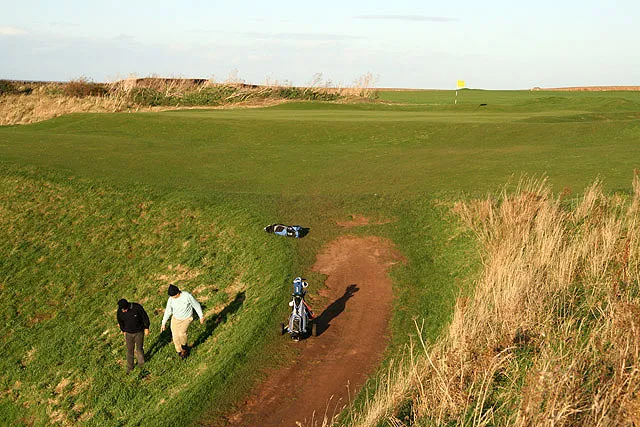
Photo: scott_debney, CC BY-SA 2.0, via Wikimedia Commons
By mid-November, the competitive season at most UK clubs has thinned to a whisper. The board competitions are decided, the honour boards have been updated, and the Saturday field begins to fragment into fourballs of convenience: friendly, fluid and entirely uncarded. There is nothing wrong with a roll-up. There is something wrong with a winter that contains nothing else.
A club that stops counting scores in October and starts again in April is asking its members to spend five months in a pleasant but competitive vacuum. The winter medal, or its Stableford cousin, is the simplest remedy available. It costs little to run, it suits the light and the weather, and it gives the cold months a shape that a casual swindle never quite provides.
The Quiet Drift Away From the Card
The drift is rarely deliberate. Frost delays shorten the day, temporary greens appear, and the committee sensibly steps back from full qualifying competition. Players respond by treating winter golf as practice: gimmes are conceded, holes are skipped, and a ball that would have been replayed in July is nudged into a better lie with a shrug. None of this is scandalous. All of it is corrosive if it becomes the whole winter.
Handicaps are not sentimental. They respond to evidence, and a player who submits nothing between November and March gives the system nothing to work with. The first spring medal then arrives with a familiar jolt: a card in hand, a swing that has been loosely managed, and a course that suddenly counts every shot again. A modest winter series smooths that transition. It keeps the routine of marking, signing and returning a score alive when the instinct to drift is strongest.
What the Cold Teaches That July Cannot
Cold air is honest. The ball does not travel as far, the fairways do not run, and the soft ground exaggerates the difference between a well-struck iron and a hopeful one. The player who arrives in January expecting summer yardages is quickly educated. That education is valuable, and it is precisely the sort of lesson that improves course management for the rest of the year.
Winter golf also rewards restraint. With less roll, the premium shifts from distance to placement. The tempting driver over the bunker becomes a considered three-wood; the flag tucked behind a ridge becomes a target for the middle of the green. Courses laid out with angles and options in mind — the sort of strategic questions associated with Montgomerie designs — become puzzles rather than slogs when the ground is slow and the air is heavy. The player who learns to plot a route in frost will plot a better route in firm conditions too.
There is a mental benefit as well. Layers, cold hands and slower greens test patience in a way that a warm July medal does not. A round that begins with a frost delay and ends with a respectable score teaches a club golfer something about temperament that no practice ground can replicate.
A Format the Committee Can Actually Run
The strongest argument for a winter competition is that it need not be complicated. A club can run a series of five or six individual Stableford events, with the best three scores counting towards an order of merit. Two divisions by handicap keep the field engaged without multiplying administration. An optional nine-hole event, scheduled to finish before dusk, brings in members who cannot commit to a full day in low light.
Where conditions and course set-up meet the criteria, a winter Stableford can be run as a qualifying competition. Where they do not — and preferred lies, temporary greens or reduced holes will often settle the matter — it should be run as a clearly labelled non-qualifying event that is still properly carded, properly marked and properly returned. The distinction matters, and members respect a committee that explains it plainly rather than quietly abandoning the card altogether.
Local rules should be published before the first tee time, not negotiated on the first green. Preferred lies in the general area, bunkers declared out of play where necessary, and a clear statement on temporary greens give the field a settled framework. A two-tee start protects the light. A modest entry fee covers a trophy and a lunch, and the lunch is not an afterthought: it is the part of the day that turns a competition into a club.
The Handicap Argument, Stated Plainly
Handicap committees are often accused of being conservative, but the conservative position here is in favour of winter cards. An inactive handicap is a brittle one. Players who go months without returning a score tend to return either a badly inflated number or a vanity figure in spring, and both distort the field. A winter series gives the committee a steady trickle of evidence and gives the player a reason to keep the number honest.
This is not an argument for pretending that a frosty December Stableford carries the same weight as a June medal. It is an argument for refusing to let the card disappear entirely. Where the score can count, let it count. Where it cannot, let it still be recorded, discussed and used as the basis for a sensible conversation about the season ahead.
Small Rituals, Serious Golf
The clubby case is just as strong as the technical one. A winter medal gives the Saturday a purpose beyond a loose fourball. It preserves the small ceremonies that make club golf what it is: the card exchange on the first tee, the coffee before the frost delay clears, the post-round table where the day is taken apart. New members who join in autumn are given an immediate route into the competitive life of the club rather than a five-month waiting list.
The coldest rounds can be the most instructive, and they can also be the most sociable. A club that runs a winter series is telling its members that the game does not stop when the leaves fall. It is a modest statement, but it is the kind of statement that keeps a club alive through the quiet months — and sends its players into spring with a card, a plan and a handicap that still means something.